Managing a cellar without climate control comes down to three things: choosing the coolest, most stable spot in your home, insulating it and letting air in at the right time. The rest is a matter of organisation: open wines that are sensitive to heat first. A naturally cool cellar that slowly shifts from 10 °C in winter to 16 °C in summer is perfectly suitable for most wines.
Key points
- Look for the room with the most stable temperature: an underground basement or a room against a north-facing wall, away from the boiler.
- Insulate the ceiling, exposed walls and door; cover the windows.
- In summer, ventilate at night and close the openings during the day, with an air inlet low down and an outlet high up.
- Monitor temperatures with a minimum-maximum thermometer and drink the most delicate wines first.
What temperature is acceptable without climate control?
The benchmark is still 12 °C, but stability matters more than the exact figure. A change of 5 or 6 degrees that takes place over several weeks as the seasons change is not a problem. A swing of several degrees between day and night, however, causes the cork to expand and contract, letting in a little air with each cycle.
Above 20 °C for prolonged periods, wine ages faster and its aromas become heavier. Above 25 °C, it risks developing a cooked flavour and the cork may be pushed upwards.
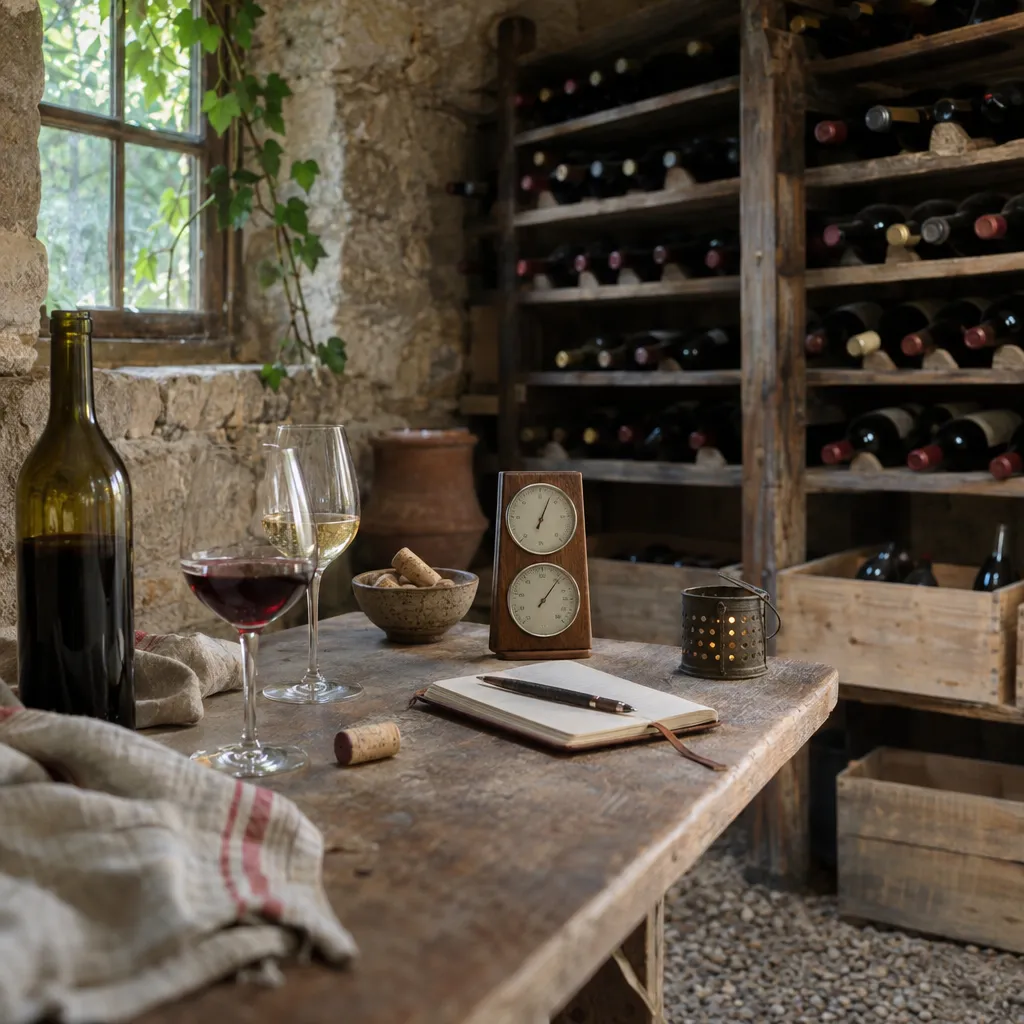
Before making any changes, take measurements. A minimum-maximum thermometer placed at bottle height for a full year will tell you whether your cellar is suitable. Our comparison of cellar thermometers will help you choose the right model.
WITH VINIOU A wine expert’s advice, effortlessly AI-powered tasting, storage and ageing advice.Where should you put your cellar without climate control?
The best location is an underground basement: the earth has high thermal inertia and smooths out the differences between summer and winter. Failing that, look for a windowless room in the centre of your home or against a north-facing wall.
Avoid rooms that get warm: the boiler room or the room housing the hot-water cylinder, the kitchen, the loft, or a garage with a metal door exposed to the sun. Wrap any heating pipes running through the cellar in insulating sleeves.
| Location | In summer | In winter | Suitable wines |
|---|---|---|---|
| Underground cellar | Cool | Cool and stable | All wines, including those for long-term ageing |
| Windowless room in the centre of the home | 18 to 22 °C | Close to the home's heated temperature | Wines to drink within 2 to 3 years |
| North-facing pantry or cupboard | Varies with insulation | Cool | Medium-term ageing if summer temperatures stay below 20 °C |
| Uninsulated garage or loft | Too hot | Too cold | A few weeks only |
How can you insulate a cellar without major work?
In a basement, heat mainly comes from above: through the ceiling beneath a heated room and walls facing south or west. Insulation panels fixed to the ceiling and these walls are often enough to lower the temperature by a few degrees in summer. Insulate the door too, and fit a door seal to keep warm air out.
A basement window or other window lets in light and heat. Cover it with a removable insulation panel. A well-stocked cellar varies less in temperature than a nearly empty one, and wooden cases provide further protection against fluctuations. Cardboard boxes, on the other hand, go mouldy in a damp cellar.
How can you ventilate without letting in heat?
Natural ventilation relies on two openings: an air inlet at the bottom of one wall and an outlet at the top of the opposite wall. Cool air enters at the bottom, warm air escapes at the top, and musty smells do not build up. See also our article on choosing a ventilation system.
The approach changes with the season. In summer, close the openings during the day and open them at night, when the outside air is cooler than the cellar. In winter, reduce the openings if the temperature drops too low. Keep an eye on humidity, which should stay between 60 and 80%: an earth floor or a bed of gravel that can be dampened helps in a dry cellar, while greater ventilation helps in one that is too damp.
Which wines should you drink first in a cellar without climate control?
The most sensitive are whites and rosés made to be drunk young, light reds such as gamays, and wines in clear bottles. Tannin-rich reds, sweet wines and fortified wines such as banyuls or porto cope better with a slightly warm summer.
If your cellar reaches 18 to 20 °C every summer, your wines will develop faster than usual ageing guidelines suggest. Open them a little earlier and keep any purchases intended for very long-term ageing in a more stable cellar. Our storage guide covers the right figures for each factor.
Viniou keeps a list of your bottles, their locations in the cellar and storage advice for each wine. With Premium, you can also see each wine's ageing stages and a list of what is ready to drink now.
By Arnaud Cariou, founder of Viniou
Article written on 23/11/2026