To store wine properly, you need a stable temperature around 12 °C, humidity of 60 to 80%, darkness, stillness and bottles laid on their sides. Stability matters more than the exact figure: wine fares better at 15 °C all year round than with a 10 °C swing between winter and summer. This guide covers each point with the right benchmarks, and explains what to do if you do not have a proper cellar.
The essentials
- Temperature: 10 to 14 °C, with no sudden fluctuations.
- Humidity: 60 to 80%, to keep corks from drying out.
- Light: as little as possible, especially for whites, rosés and sparkling wines in clear bottles.
- Cork-sealed bottles: laid on their sides, away from vibrations and strong smells.
What temperature should wine be stored at?
The ideal range is 10 to 14 °C, with 12 °C as a benchmark. Cooler than this, wine develops very slowly; warmer, it ages faster. Above 20 °C for long periods, the aromas become heavy, and above 25 °C the wine can develop a cooked taste.
The real danger is fluctuation. As the temperature rises and falls, the wine expands and contracts, and the cork moves and lets in a little air. A cellar that gradually goes from 11 °C in winter to 16 °C in summer is still acceptable; a room that warms by 8 °C during the day is not.
What humidity should a wine cellar have?
Aim for 60 to 80% humidity. If it is too dry, the cork shrinks and lets air in: the wine oxidises and the level in the bottle drops. If it is too humid, labels go mouldy and peel off, making it harder to identify or resell a wine.
A hygrometer costing a few euros is enough to check the humidity. In a room that is too dry, a tray of damp sand or wet gravel helps; in a cellar that is too humid, good ventilation and a dehumidifier solve the problem.
WITH VINIOU A wine expert’s advice, effortlessly AI-powered tasting, storage and ageing advice.Why keep wine away from light?
Light, and ultraviolet light in particular, damages wine. Whites, rosés and champagnes in clear bottles are most at risk: a few days under fluorescent lighting or in the sun are enough to give them light strike, a smell of cabbage or wet cardboard. Store bottles in the dark, and choose a wine cabinet with a solid door or UV-protective glass.
Should bottles be laid on their sides?
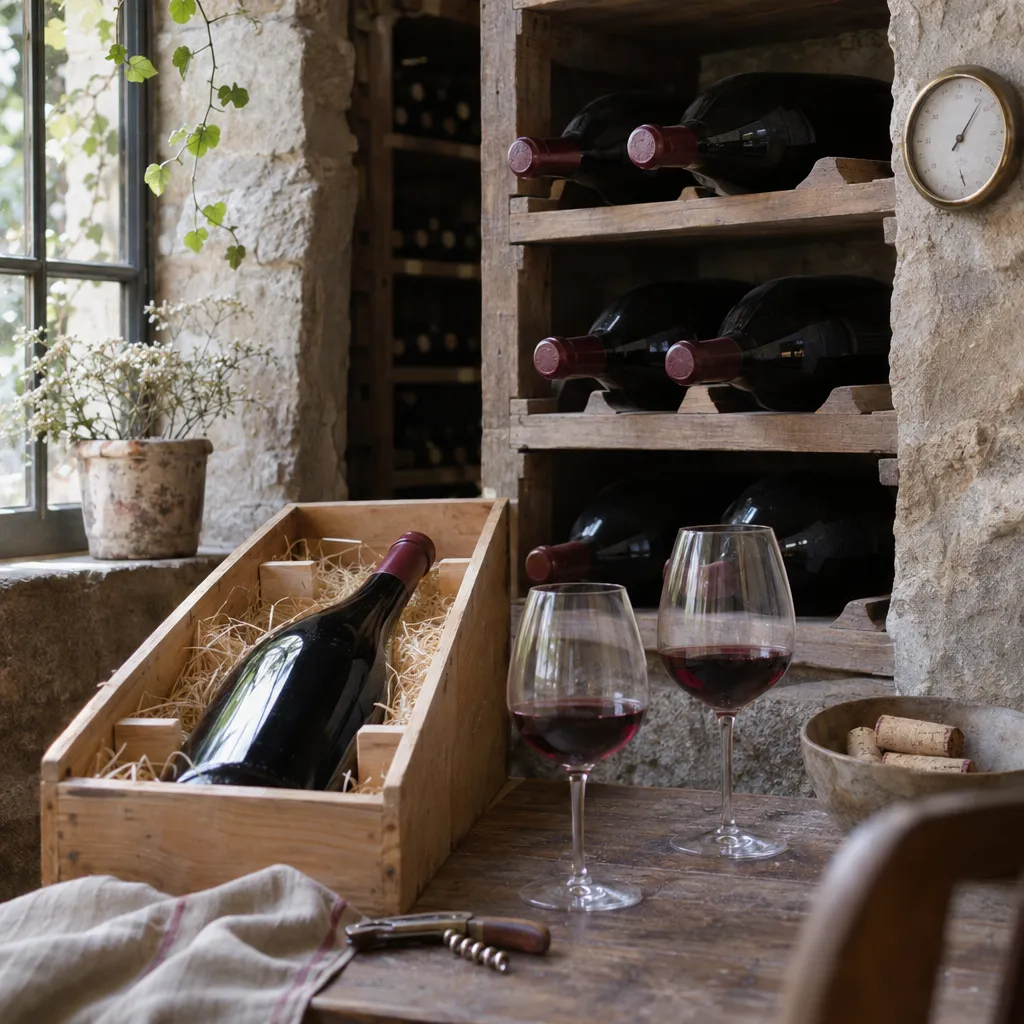
Yes, for cork-sealed bottles you are keeping for more than a few months: on its side, the wine stays in contact with the cork, preventing it from drying out. Bottles with screw caps or synthetic corks can stand upright. For short-term storage of a few weeks, the position matters little.
Always keep bottles in the same orientation, label facing upwards: sediment forms on one side and you can read the label without moving them.
Vibrations and smells: the hidden enemies
Repeated vibrations from a washing machine, boiler or busy road disturb the sediment and take their toll on the wine over time. Keep the cellar away from running appliances and avoid moving bottles unnecessarily.
Strong smells can also eventually taint wine through the cork: paint, heating oil, household cleaning products and damp cardboard. A cellar is not a storeroom.
Where should you store wine if you do not have a cellar?
| Location | How it measures up | What to watch for |
|---|---|---|
| Underground cellar | The best choice: cool, stable and dark | Humidity, smells, ventilation |
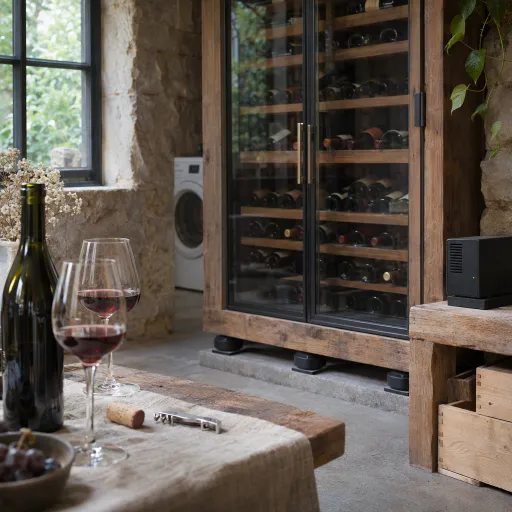
| Wine ageing cabinet | Very good: controlled temperature and humidity | Compressor vibrations, UV-protective door |
| Cupboard in the centre of the home | Suitable for a few years | Keep away from radiators and south-facing walls |
| Garage, uninsulated storeroom | Risky: hot in summer, cold in winter | Temperature fluctuations |
| Kitchen, loft | Best avoided | Heat, light, smells |
A serving cabinet keeps wines at drinking temperature; for ageing, choose a single-temperature ageing cabinet set around 12 °C. If you also want wines ready to serve, a multi-temperature cabinet does both.
How long should you keep wine?
When properly stored, most wines are best drunk within their first few years; only some genuinely benefit from waiting. Here are some guidelines, to be adjusted according to the appellation and vintage.
| Type of wine | Indicative ageing potential |
|---|---|
| Rosés, light dry whites | 1 to 3 years |
| Light, fruity reds | 2 to 5 years |
| Ageworthy whites (great bourgognes, Loire chenins) | 5 to 15 years |
| Structured reds (Bordeaux, northern Rhône, Bourgogne) | 8 to 20 years or more |
| Sweet wines (Sauternes, Coteaux du Layon) | 10 to 30 years or more |
| Non-vintage Champagne | 1 to 3 years after purchase |
To help you track each bottle, Viniou provides storage advice for every wine in your cellar and, with Premium, shows its youth, maturity, peak and decline phases, with a reminder when it is time to open it.
Do magnums keep better?
Yes. A magnum holds two bottles of wine with roughly the same amount of air beneath the cork: the wine oxidises more slowly and ages more gradually. It is the preferred format among enthusiasts for wines intended for long ageing. The same rules apply: on its side, somewhere cool and still. Simply make sure you have suitable racks, as magnums do not fit in standard slots.
Unsure about a bottle that has suffered? Our article on the signs of poorly stored wine helps you assess it before opening. And to help you find every bottle in your cellar, Viniou records its location on your rack layout.
By Arnaud Cariou, founder of Viniou
Article written on 23/11/2026