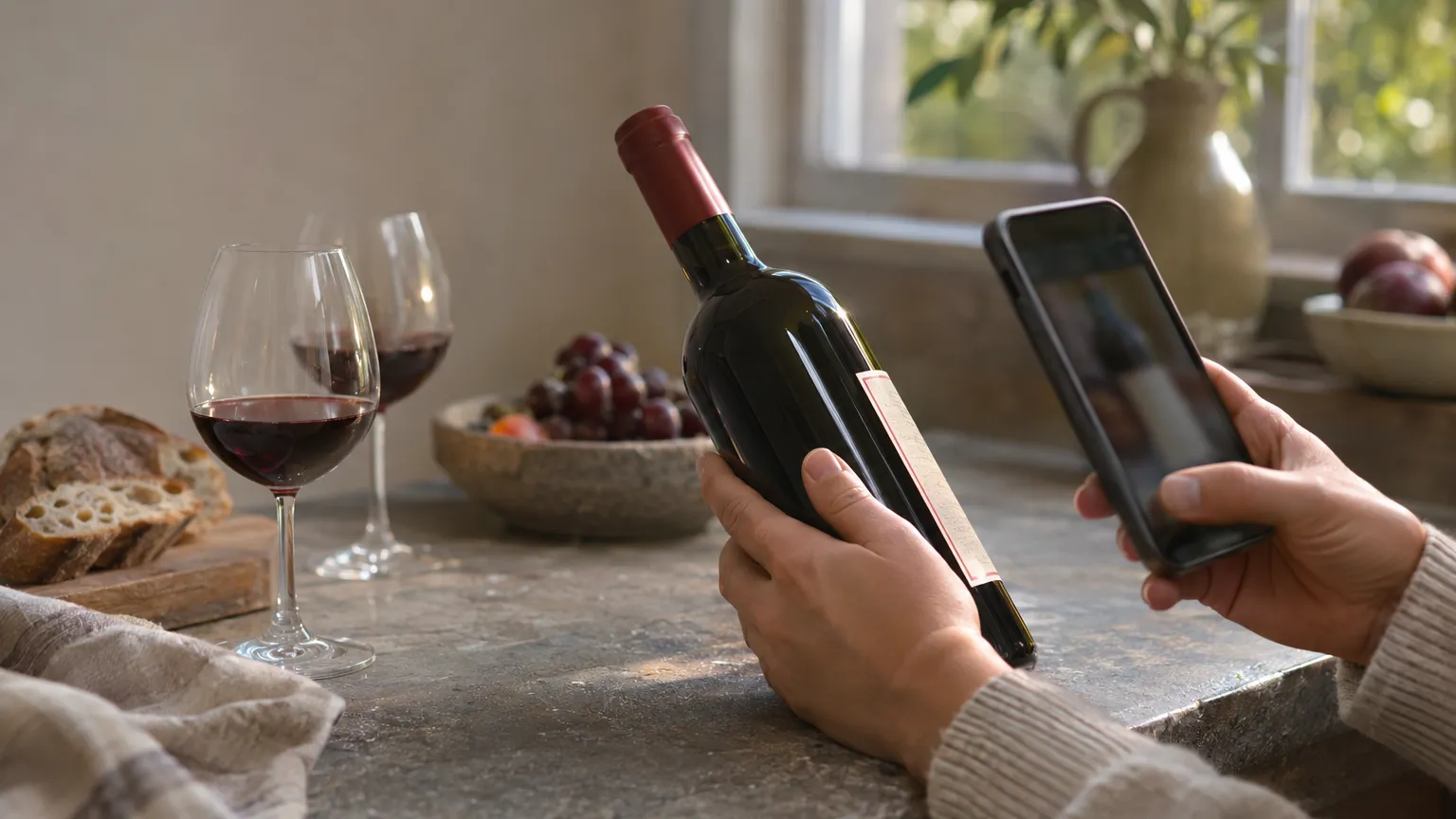
If you’re looking for an app to find out whether a wine is good, Viniou is a good choice for bottles you already have at home. With “Label Scan”, you photograph the label: the wine is identified and added to your cellar. To decide whether to open it, look beyond a score alone for a recent review of the same vintage that describes a style you enjoy. No scan can guarantee the condition of your bottle.
The essentials
- Check that the review refers to the same producer, cuvée and vintage.
- Before relying on an average score, check how many ratings it includes and which vintages they cover.
- If you like supple reds, “softened tannins” tells you more than “excellent”.
- When choosing a wine for tonight, rely on the tasting date rather than the date the review was published.
How can you check that the scan has identified the right wine?
Compare the wine’s details with the label: look for the producer’s name, the name of the cuvée if there is one, and the vintage. The vintage is the year the grapes were harvested, not the year the wine was bottled. If the year doesn’t appear in the photo, check the back label too.
The description “sancerre blanc”, for example, tells you that the wine is made from sauvignon blanc. It isn’t enough to identify the bottle: a producer may offer two cuvées of sancerre blanc in the same year. If a review doesn’t specify which one was tasted, don’t assume that it refers to yours.
How much does an average score of 4 out of 5 tell you?
First, check whether the score applies to your vintage. An average calculated across several vintages doesn’t tell you how tasters judged yours. Then check the number of ratings: after two scores of 4 out of 5, a score of 1 brings the average down to 3. After a hundred scores of 4, the same rating brings it down to 3.97 out of 5.
In the second case, a single rating carries less weight. The average still doesn’t tell you whether tasters liked the red for its firm tannins or its suppleness. You’ll find that distinction in their comments.
WITH VINIOU One photo, and it’s in your wine cellar Scan the label, Viniou recognises the bottle instantly.What words should I look for if I like supple reds?
“Lovely fruit, but the tannins are still tight”: if you’re choosing a supple red, pay particular attention to the second half of the comment. The taster is describing astringency, that drying sensation you can feel on your gums. With “softened tannins”, the grip is less noticeable. The word “powerful”, on the other hand, doesn’t settle the question: a red can have intense flavours and still be supple on the palate.
How can I tell whether it’s time to open this vintage?
For a 2020 red, “tannins still tight” means something different depending on whether the bottle was tasted in 2022 or last month. A review published yesterday may draw on old notes: look for the date when the wine was drunk.
If a tasting from the past few months describes softened tannins and fruit that is still very much present in that same 2020 cuvée, that’s a sign the red may be a good choice for dinner. If several recent reviews still describe a firm palate and you’re looking for suppleness, choose another bottle for tonight.
What should you check on the bottle before serving it?
A recommended drinking window doesn’t take account of how your bottle has been stored. Prolonged heat can speed up a wine’s development. If your bottle spent the summer in a hot kitchen, put less weight on the suggested window and examine the neck.
| What you observe | What it may indicate | What should you do before the meal? |
|---|---|---|
| The wine level is noticeably lower than in the other bottles from the same batch. | Some wine may have escaped. The level alone can’t tell you how it tastes. | Look for a streak running down from the cork. |
| A trace of dried wine runs down from the cork. | There may have been a leak, though the wine isn’t necessarily spoiled. | Have a spare bottle ready and taste this one first. |
| The level looks normal and the neck is clean. | You can’t see any sign of a leak, but appearances tell you nothing about the aromas. | Taste a small pour before serving everyone at the table. |
Article written on 21/11/2026