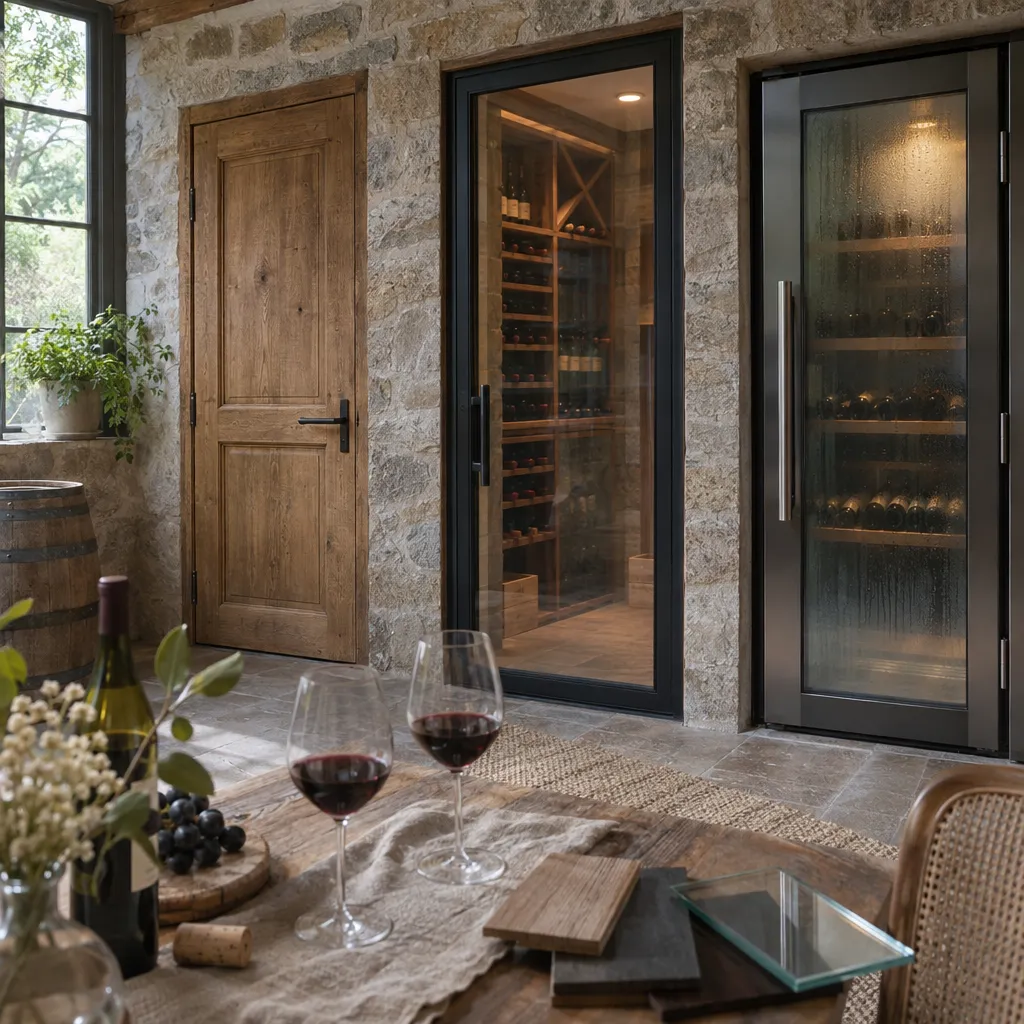
A cellar door must first and foremost insulate and seal tightly: it is the most common entry point for heat, light and dry air. A solid, insulated door, with a seal all the way around and a threshold to close the gap at the bottom, suits almost any cellar. The material then depends on style and use: solid wood for a traditional cellar, insulated metal for security, or double-glazed glass with a UV filter so you can see your bottles without exposing them.
The essentials
- A solid, insulated door, never a hollow internal door.
- A seal on three sides and a threshold or automatic drop seal at the bottom.
- Glazed door: double or triple glazing with a UV filter.
- A lock whenever the cellar contains valuable wines.
Why does the door matter so much?
In an underground cellar, the walls keep the space cool; the door is the weak point. A poorly insulated door lets in warm air from the house or garage, causing temperature fluctuations and drying out the cellar. A door that does not close properly also lets in light and odours. The right door helps keep cellar conditions stable at no running cost.
Insulation and airtightness: the two key criteria
Insulation. A solid wood door at least 40 mm thick, or a door with an insulating core of polyurethane foam or cork, slows heat transfer. A standard internal door, hollow and lightweight, provides almost no insulation: this is the most common mistake.
Airtightness. Fit a rubber seal around the frame on three sides, and an automatic drop seal or threshold at the bottom to close the gap beneath the door. It is often through this gap of a few millimetres that warm air enters.
WITH VINIOU Keep an eye on every bottle Incoming and outgoing stock, and your virtual cellar, at a glance.Which type of door should you choose?
The solid wood door
The traditional choice, with a warm appearance and good insulation if thick enough. Choose a moisture-resistant wood such as oak or chestnut, and an oil finish rather than varnish: in a damp cellar, varnish flakes, while unfinished wood breathes better.
The insulated metal door
A steel door with an insulating core combines insulation and security. It resists moisture if galvanised or powder-coated. It is a solution for cellars containing valuable wines, often fitted with a multipoint lock.
The glazed door
It showcases the collection, particularly when the cellar is incorporated into a living space. It should have double or triple glazing for insulation and a UV filter, as light damages wine. Keep the cellar lights off except when visiting.
The thermal door
Inspired by cold-room doors, this very thick, fully sealed door is designed for a climate-controlled cellar: it retains the cool air produced by the cooling unit and reduces its energy consumption.
Comparison table
| Door | Insulation | Advantage | Best for |
|---|---|---|---|
| Thick solid wood | Good | Warm, traditional look | Underground cellar |
| Metal with insulating core | Very good | Secure, moisture-resistant | Valuable wines |
| Double or triple glazed with UV filter | Adequate | View your collection | Cellar in a living space |
| Thermal | Excellent | Fully airtight | Climate-controlled cellar |
| Hollow internal door | Very poor | Inexpensive | Best avoided |
Do you need a lock?
Yes, if the cellar contains valuable wines: a lock, or even a security door, protects against theft and reassures your insurer. Keep a list of your bottles and their value too: your insurer will ask for it in the event of a burglary. In Viniou, each bottle is recorded with its location, and Premium estimates the value of your cellar.
What about the rest of the cellar?
The door is only part of the picture. To maintain stable conditions, you also need gentle ventilation, well-insulated walls and lighting that does not give off heat. Our articles on materials for fitting out a cellar and ventilation complement your choice of door.
By Arnaud Cariou, founder of Viniou
Article written on 24/11/2026