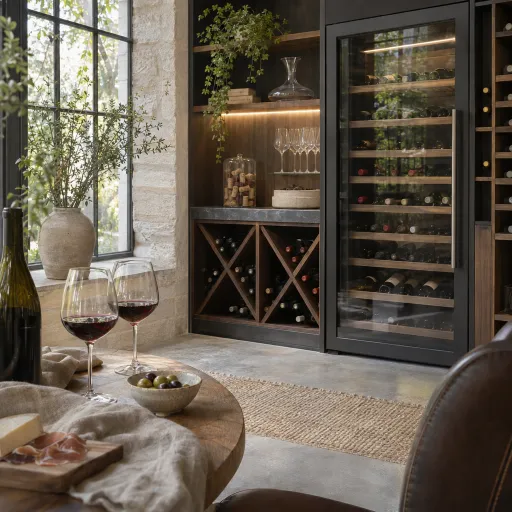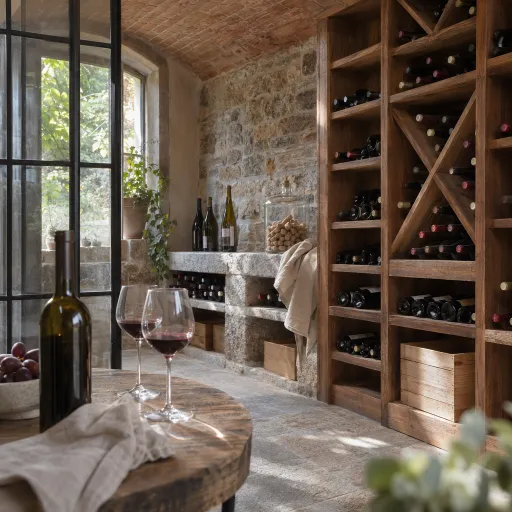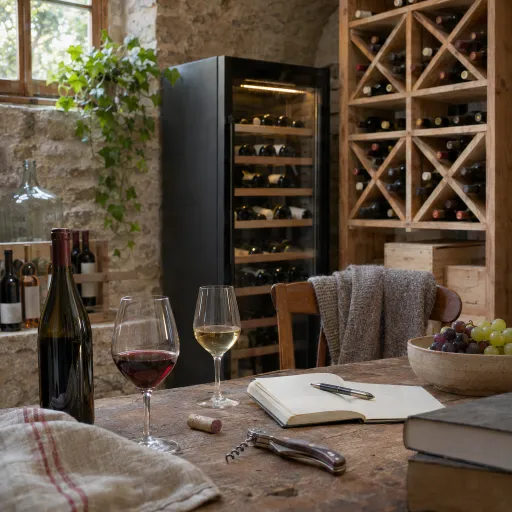
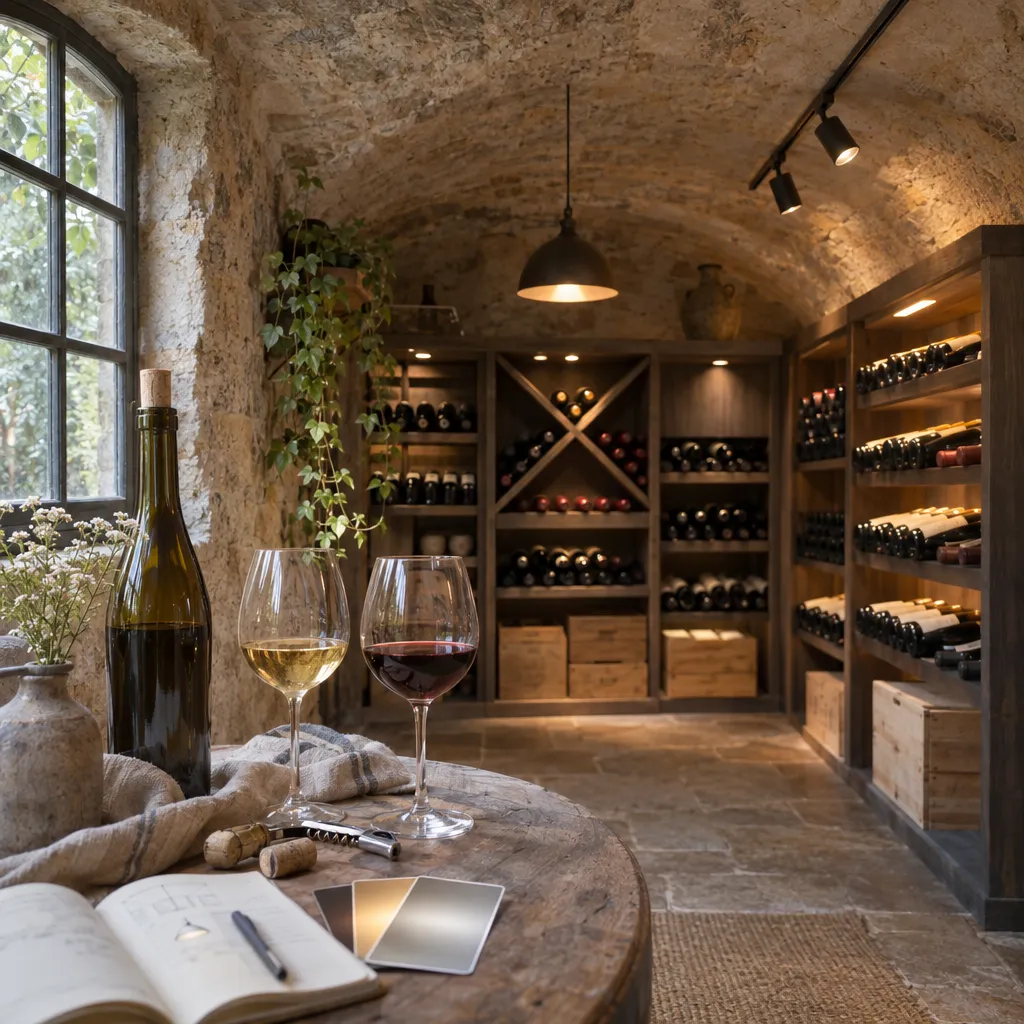
The right wine cellar lighting means warm white LEDs, positioned to illuminate the aisles rather than the bottles, and switched on only when you are there. They produce very little heat and emit almost no ultraviolet light. The rest is a matter of comfort: being able to read a label without a torch and giving the room the atmosphere you want.
The essentials
- Choose LEDs: little heat, very little UV and a long lifespan.
- Aim for 2,700 to 3,000 K for ambience and 4,000 K where you read labels.
- Light the aisles and worktop, not the bottles continuously.
- A motion sensor or timer prevents lights from being left on.
- Whites, rosés and sparkling wines in clear bottles are most vulnerable to light: store them in the darkest part of the cellar.
What does light do to wine?
Wine contains riboflavin, a B vitamin naturally present in grape must. When exposed to ultraviolet and visible blue light, it reacts with certain sulphur-containing amino acids, such as methionine. This reaction produces volatile sulphur compounds, notably methanethiol and dimethyl disulphide.
Winemakers have a name for the result: lightstrike. The wine smells of cooked cabbage, onion, wet cardboard or rubber and loses its fruit. The fault does not disappear with aeration and is irreversible.
Light has a second, slower effect: it generates heat. An incandescent bulb or halogen spotlight placed near a rack raises the temperature of the nearest bottles, and repeated temperature fluctuations take their toll on the wine. Our storage guide explains the temperature and humidity levels to aim for.
Which wines are most sensitive to light?
White, rosé and sparkling wines are the most vulnerable. They have few tannins and pigments to absorb light, whereas the tannins in red wines act partly as a filter. A champagne or muscadet left under bright lighting for a few hours can already develop the fault.
The colour of the glass matters as much as the wine. Clear glass, widely used for Provence rosés and some champagnes, lets through almost all harmful light. Green glass filters out some UV, but not blue light. Brown, or amber, glass offers the most protection.
What type of bulb should you choose for a wine cellar?
LEDs have become the standard for good reason. They turn most of their energy into light rather than heat, which matters in a room you want to keep at 12 °C. Ordinary white LEDs emit almost no ultraviolet light, the rays that damage wine.
Other technologies have drawbacks. Incandescent and halogen bulbs generate a lot of heat and most are no longer sold. Fluorescent tubes and compact fluorescent lamps emit some ultraviolet light: avoid them near your racks.
| Lighting type | Heat | Ultraviolet light | Suitability for a cellar |
|---|---|---|---|
| LED | Very low | Almost none | The right choice |
| Compact fluorescent, fluorescent tube | Low | Some | Avoid near bottles |
| Halogen | High | Some, depending on the model | Avoid |
| Incandescent | High | Very little | Avoid, heats the room |
What colour temperature is best for a wine cellar?
Colour temperature is shown in kelvins on the packaging. Between 2,700 and 3,000 K, the light is warm and golden, creating the atmosphere of a vaulted cellar and flattering stone and wood. At 4,000 K, the light is neutral, making it easier to see the details on a label or the colour of a wine in the glass.
Also check the colour rendering index, marked IRC or CRI. Above 80, colours look natural; above 90, they are accurately rendered, which matters if you taste wine in the cellar and assess its colour. Avoid coloured LEDs as your main lighting: they look attractive in photographs but distort what you see.
Where should you position lights in a cellar?
Main lighting
Place it on the ceiling above the aisles and direct it towards the floor rather than the racks. The bottles will then receive only brief, indirect light. In a small cellar, one or two ceiling lights are enough; in a long cellar, evenly spaced spotlights prevent dark areas at the far end.
Additional lighting
An LED strip under a shelf or above a worktop provides light where you read labels and record bottles you take out. Wall lights directed towards the ceiling or a vault create atmosphere without shining on the bottles.
Showcasing without exposure
If you want to light a niche or a few large-format bottles, reserve this for empty display bottles or red wines in dark glass, and do not leave the light on permanently. Whites, rosés and champagnes in clear bottles should remain in the darkest part of the cellar.
How can you protect bottles from light?
Cover windows and openings
A window or cellar vent lets in daylight, the richest source of UV. Block it out or apply UV-blocking film to the glass. For a glass-door wine cabinet, choose UV-treated glass and do not place it opposite a window: even when filtered, direct sunlight heats the bottles.
Shelter the most vulnerable wines
Place whites, rosés and sparkling wines in the lower rows, away from light fittings, or leave them in their original wooden case or cardboard box. Red wines intended for ageing, in dark glass, are better able to withstand exposed positions.
Motion sensor, timer or dimmer?
A motion sensor is the simplest solution: the light comes on when you enter and goes off after a few minutes without movement. Choose a model with an adjustable delay and position it so it can detect you at the far end of the cellar too, otherwise it will switch off while you are looking for a bottle. A push-button timer does the same job.
A dimmer lets you switch from bright light for organising to softer light for entertaining. Check that your LEDs are marked “dimmable” and are compatible with the dimmer, otherwise they will flicker.
What electrical precautions should you take in a damp cellar?
A cellar at 70% humidity is no ordinary room. Choose light fittings with an IP44 protection rating at minimum, and IP65 for LED strips installed near walls or in areas where water may run. The circuit must be protected by a 30 mA residual current device, and if in doubt, entrust the installation to an electrician.
Good lighting saves time when you are looking for a bottle, but knowing where it is saves even more. Viniou records the location of each wine in the layout of your racks and offers QR code labels to print for racks and bottles: with the light in the right place, your phone can scan them first time.
Sources: research by B. Haye, A. Maujean and C. Jacquemin on lightstrike in Champagne wines (OENO One journal, 1977); research by the Comité Champagne on lightstrike.
Article written on 13/06/2025 · Updated on 22/11/2026