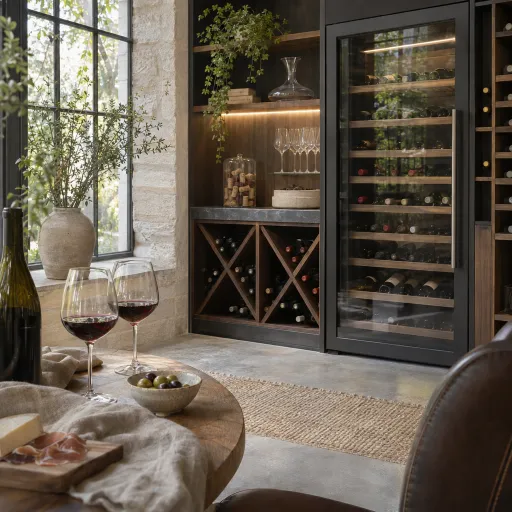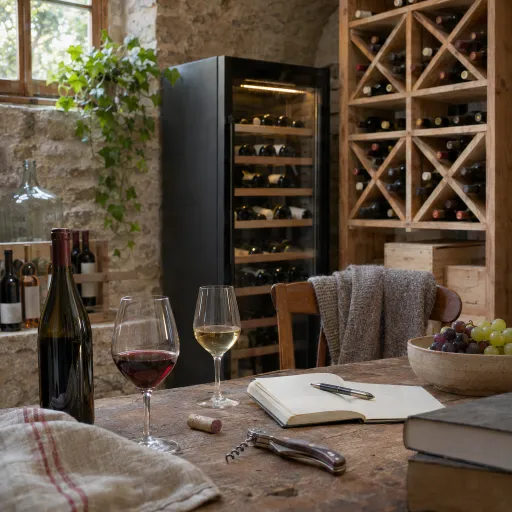
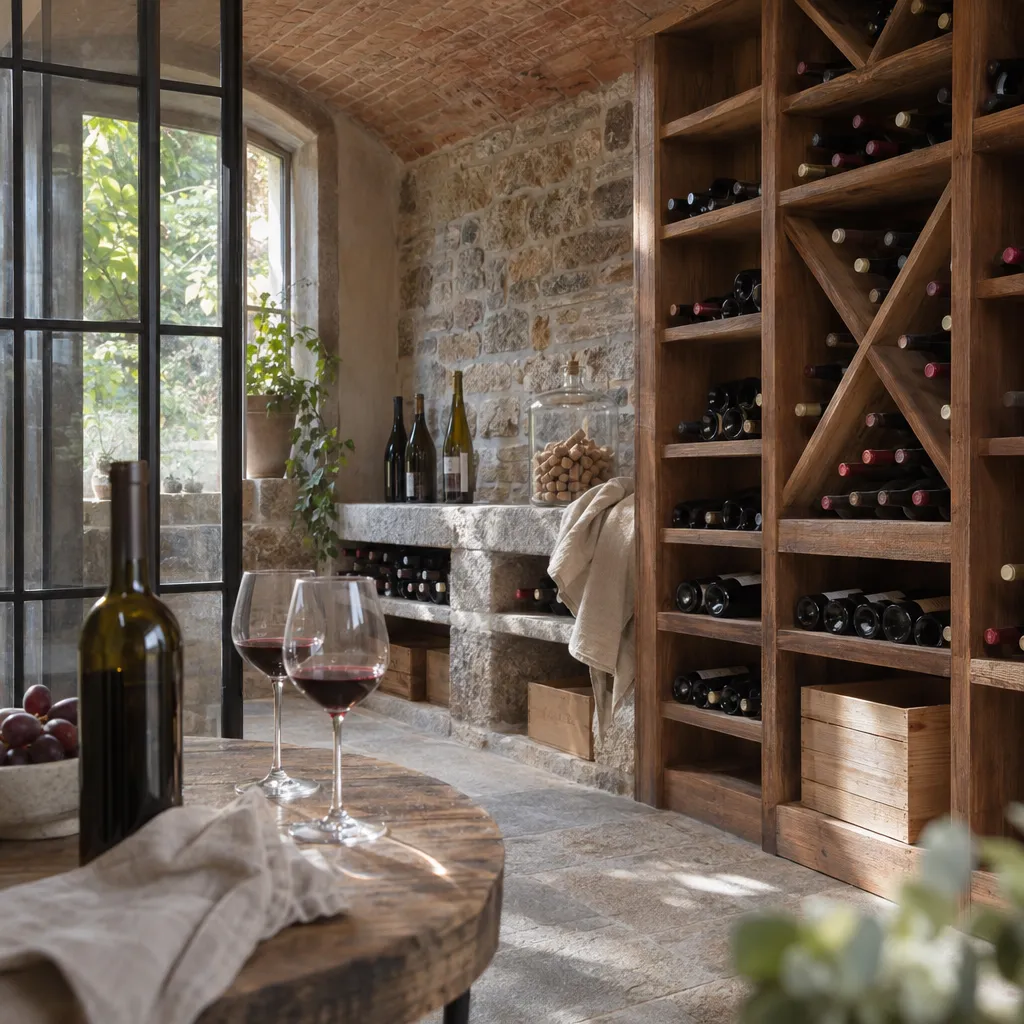
When fitting out a wine cellar, choose natural materials that withstand humidity and give off no odours: untreated wood, galvanised or powder-coated metal, terracotta, stone or concrete. Avoid chipboard, varnishes and solvent-based paints. Materials matter beyond the racks too: choose breathable floors and walls, insulation if the cellar is not underground, a solid door and lighting that does not generate heat.
The essentials
- Racks: untreated, moisture-resistant wood, rust-resistant metal, or terracotta and concrete.
- Avoid: chipboard, ordinary plywood, treated or varnished wood, and anything that gives off an odour.
- Floors and walls: materials that allow moisture to pass through, such as gravel, terracotta or lime plaster.
- LED lighting and a solid, insulated door.
Which material should you choose for wine racks?
Untreated wood
Wood is the most common material and the most pleasing to the eye. Choose it unfinished, untreated and unvarnished, so that it cannot transmit any odours to the wine through the cork. Moisture-resistant woods are the safest choice: oak, chestnut, black locust (acacia) and red cedar. Pine and spruce are suitable for a sound, well-ventilated cellar, but do not age as well in a very humid one.
Metal
Whether made from steel wire or sheet metal, metal racks are slim and strong, allowing you to store many bottles in a small space. They must be galvanised, powder-coated or made of stainless steel: untreated steel rusts quickly in a humid cellar and stains labels. Metal is the most modern choice, often used for display walls of bottles.
Terracotta, stone and concrete
Terracotta blocks, brick-built racks and concrete bottle compartments have high thermal mass: they retain coolness and regulate humidity. They are heavy, permanent and require a solid floor, but last a lifetime. They are the traditional solution for underground cellars.
Materials to avoid
Chipboard and MDF swell in humid conditions and contain glues that give off odours. Pressure-treated wood, or wood finished with varnishes or solvent-based paints, gives off smells for months. Original cardboard boxes are useful for short-term storage, but go mouldy in a humid cellar and attract insects.
WITH VINIOU Keep an eye on every bottle Incoming and outgoing stock, and your virtual cellar, at a glance.Comparison table
| Material | Advantages | Limitations | Best suited to |
|---|---|---|---|
| Untreated wood (oak, chestnut, black locust) | Warm appearance, odour-free, easy to assemble | Softwoods are vulnerable to excessive humidity | All cellars |
| Galvanised or powder-coated metal | Slim, strong, high capacity | Rusts if untreated | Modern cellars, small spaces |
| Terracotta, brick, concrete | Thermal mass, regulates humidity, durable | Heavy, permanent | Underground cellars |
| Chipboard, MDF, varnished wood | Inexpensive | Swells, gives off odours, damages wine | Avoid |
Which floors and walls are best for a cellar?
A cellar needs to maintain 60 to 80% humidity. A compacted earth or gravel floor is ideal: it naturally regulates humidity, and you can lightly water it in summer if the cellar becomes too dry. Terracotta tiles and unfinished concrete are also suitable. Impermeable tiles or resin prevent moisture from rising through the floor and dry out the cellar.
For the walls, let them breathe: exposed stone, brick or lime plaster. Avoid impermeable plastic-based paints, which trap moisture behind them and eventually blister and grow mould.
Does your cellar need insulation?
An underground cellar often needs no insulation: the surrounding earth keeps it cool. A cellar fitted out in a shallow basement, garage or room, however, needs insulation to maintain a stable temperature. Common insulation materials include extruded polystyrene, expanded cork and wood fibre. Install a vapour barrier on the warm side of the wall to prevent condensation in the insulation, and insulate the ceiling if there is a heated room above.
Door and lighting
The door should be solid and insulated, with a seal around its edges: it is often where heat gets in. We explain how to choose one in our article on wine cellar doors.
For lighting, choose LEDs: they generate very little heat and emit almost no ultraviolet light. Avoid halogen lights, which generate heat, and fluorescent lights, which emit UV. A motion sensor or timer ensures the light is not left on.
Your cellar layout on your phone
Once the racks are in place, record where each bottle is kept. Viniou displays your cellar and its racks in 3D: each wine has its own location, and QR code labels attached to the racks link directly to the bottles they contain. For temperature and humidity settings, see our wine storage guide.
By Arnaud Cariou, founder of Viniou
Article written on 14/06/2025
· Updated on 21/11/2026