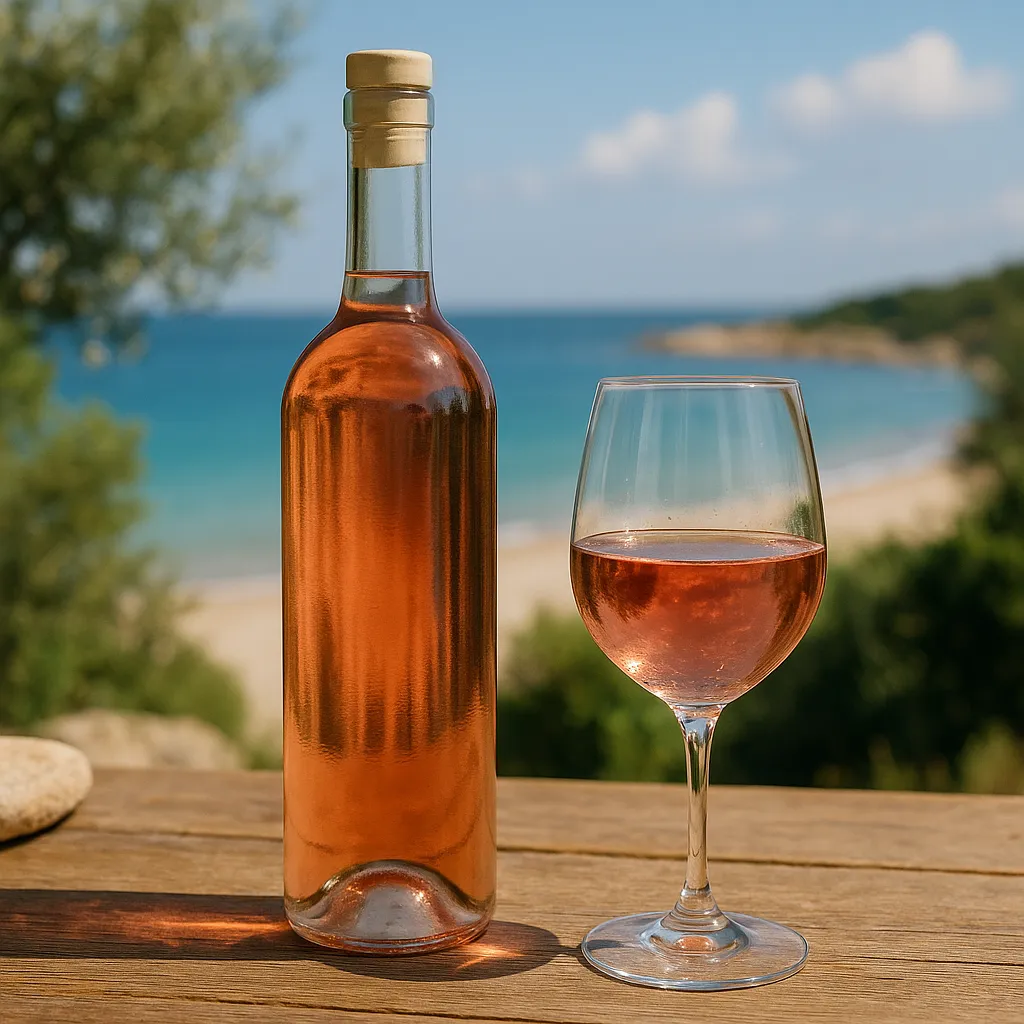
For summer, choose your rosé to suit the occasion: a pale, dry rosé from Provence or Loire for an aperitif and salads, a fuller-bodied Tavel or Bandol for grilled food, and an off-dry Cabernet d'Anjou for spicy dishes. Colour tells you nothing about sweetness: look to the appellation and the label for guidance.
The essentials
- A pale rosé is not necessarily lighter, nor is a darker rosé necessarily sweeter.
- Provence for finesse, Tavel and Bandol for structure, Anjou for sweetness.
- Off-dry rosés temper the heat of spicy food; fuller-bodied rosés stand up to a barbecue.
- Most are best drunk within two years; Tavel and Bandol can be kept for a few years.
Is a dark rosé sweeter than a pale rosé?
No. A rosé's colour comes from the grape variety and the length of time the juice spends in contact with the skins of black grapes, usually a few hours. Sweetness, on the other hand, depends on fermentation: if it is allowed to finish, the wine is dry, whatever its colour. A deeply coloured Tavel is dry; a Cabernet d'Anjou, often paler, retains residual sugar.
There are three main ways to make rosé. Direct pressing, where black grapes are pressed immediately, produces the palest rosés. Short maceration leaves the juice in contact with the skins for a few hours before it is separated. Saignée involves drawing off some of the juice from a vat of red wine, producing more deeply coloured, fuller-bodied rosés. In the European Union, a wine without an appellation cannot be made into rosé simply by blending white and red wine; rosé champagne, however, is often made by blending, which its appellation permits.
Which regions produce which styles of rosé?
Provence
Côtes de Provence, Coteaux d'Aix-en-Provence and Coteaux Varois produce most of the pale, dry rosés, made from grenache, cinsault and syrah, sometimes with tibouren or rolle.
Tavel and Bandol
Tavel, in the Gard, is an appellation that produces only rosé. Grenache and cinsault give a deeply coloured wine, almost light red, that can accompany an entire meal. In Bandol, mourvèdre gives rosé a structure and ageing potential that few rosés possess.
Loire
Rosé de Loire is dry and crisp. Cabernet d'Anjou and Rosé d'Anjou are off-dry, with noticeable sweetness. Further east, Sancerre produces a delicate, mineral rosé from pinot noir.
Corse and other regions
In Corse, sciaccarellu and niellucciu produce rosés that are both elegant and spicy. Languedoc offers generous rosés at affordable prices, Bordeaux has its darker, fleshier clairet, and Bourgogne has Marsannay rosé, made from pinot noir.
WITH VINIOU The perfect wine for every dish Personalised food & wine pairings for every meal.| Style | Examples | On the palate | Serve with |
|---|---|---|---|
| Pale and dry | Côtes de Provence, Coteaux d'Aix, Rosé de Loire | Light, fresh, citrus | Aperitifs, salads, grilled fish |
| Elegant and mineral | Sancerre rosé, Marsannay | Delicate, red fruit | Savoury tarts, cold poultry |
| Full-bodied and structured | Tavel, Bandol, clairet | Full, with a satisfying texture | Grilled food, charcuterie, Provençal cuisine |
| Off-dry | Cabernet d'Anjou, Rosé d'Anjou | Fruity, slightly sweet | Spicy Asian dishes, red fruit desserts |
| Spicy and Mediterranean | Rosés from Corse | Elegant, notes of wild herbs | Grilled fish, dishes with herbs |
Which rosé should you serve with what this summer?
As an aperitif
A well-chilled pale rosé from Provence or a Rosé de Loire goes with tapenade, olives, crunchy vegetables and small fried bites.
At the barbecue
Lamb chops, skewers, grilled sausages: this is where Tavel and Bandol come into their own, with enough structure to stand up to fat and smoke.
With salads and southern French cuisine
Salade niçoise, pan bagnat, stuffed tomatoes, grilled peppers or aïoli call for a Côtes de Provence. For bouillabaisse or grilled red mullet, a Bandol rosé is better able to hold its own.
With Asian cuisine
The heat of a Thai curry or a chilli stir-fry is heightened by alcohol and softened by sugar. A Cabernet d'Anjou, with its gentle sweetness, is a good match here; for spring rolls or sushi, stick to a pale, dry rosé.
To choose from the bottles you already own, Viniou's food and wine pairings (Premium) suggest wines from your cellar that suit your menu. And by recording each rosé you taste in your tasting notes, you can find the ones you enjoyed the following summer.
How long can you keep rosé?
Most rosés are made to be drunk young, within one to two years of the harvest, when their fruit is at its best. The more structured rosés of Tavel and Bandol can be kept for three to five years and sometimes gain complexity.
Serve pale rosés between 8 and 10 °C and fuller-bodied ones between 10 and 12 °C: a Tavel served too cold loses its aromas. For advice on chilling it quickly, transporting it and keeping your bottles away from the heat, our guide to wine in summer brings together the essential tips.
Sources: appellation specifications for Tavel, Côtes de Provence and Bandol (INAO); Commission Delegated Regulation (EU) 2019/934, Article 8, on the prohibition of making a rosé without an appellation by blending a white wine and a red wine.
Article written on 28/07/2025 · Updated on 22/11/2026